
Hitching the Awe Highway
An encounter with migrating dolphins becomes an exploration of awe’s potential in human life

Have you ever been so enraptured among wild animals that distinctions slipped away and, for a while, you forgot you were human?
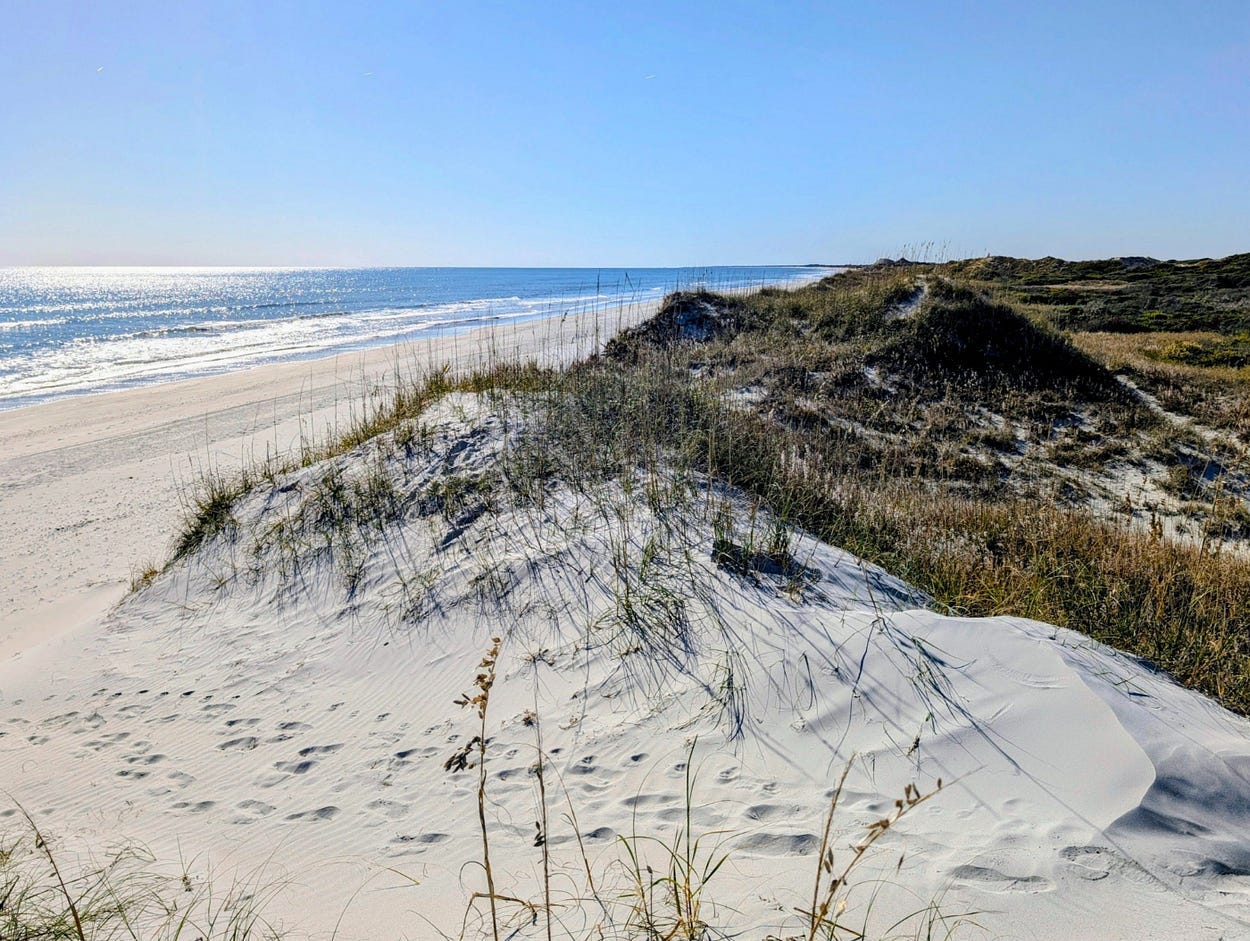
I had one such experience while paddling the seaward side of North Carolina’s Bear Island, a couple of months ago. This wasn’t a lazy summer afternoon, visiting Flipper in an aquarium kind of experience. It was more of the rollicking, heart-pounding, hold-onto-your-hat-and-seat variety. Only I couldn’t hold onto either because I was holding my paddle — and paddling as fast as I could.
My partner, Leslie, and I had paralleled the wild beach and were approaching the northeast tip of Bear Island, about 2.5 miles from the mainland. The current was coming from the northeast. The waves and wind were coming from the southwest. The surf was crashing on the shore to our left. The open sea was to the right.
These are conditions that require focus. Staying upright is not guaranteed, no matter your level of skill.
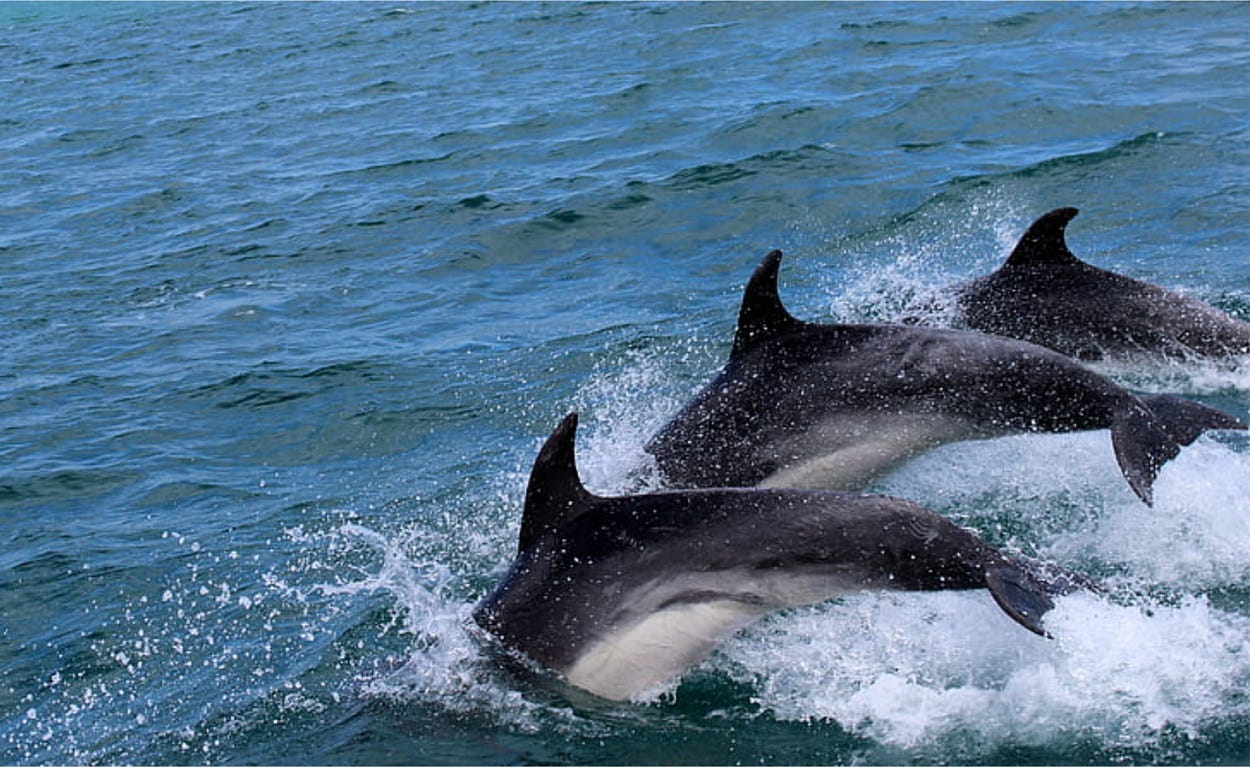
That’s when we first caught sight of a group of 15 dolphins and angled toward the beach to get closer. They breached in pairs — or sometimes in threes or fours. They were racing with the current — and against the wind and waves. They swam and surfaced with such vigor, speed, and grace that it was hard not to see it as joy.
Was it the speed boost of the tidal current, the exhilaration of traveling as a group, the steepness of the waves, the briskness of the November air, the sea of shimmering silver they glimpsed with each leap, or even a little showing off? I’ll never know for sure. They seemed infused with giddiness, and it was contagious. I forgot my concerns about getting too close to the breakers and our timetable for rounding the point before the tidal current increased. I turned my kayak into the wind and joined them.
For moments at a time, they were breaching all around me, shouldered close as harnessed horses, their muscular dark bodies arching impossibly into the sunlight. I could hear the “fhhht” of their exhalations. They could hear mine. That’s how close. Then they’d be underneath the surface. I paddled as fast as I could, the bow of my kayak pounding into the oncoming waves, the salt spray pelting my arms, chest, and face.
Together, we traveled a line just far enough off the beach not to be caught in the breaking waves, just near enough that, with a moment’s inattention or a rogue wave, we might. The dolphins surfaced near me again and then were beneath me again. This pattern repeated several more times. They neither acknowledged me nor made an effort to veer away. Then, finally, I was short of breath, and my shoulders burned with exertion. I slowed up, and they continued onward, still heading southwest. I watched past the point when they merged with the sparkles in the sun-spattered sea.
A healthy de-centering
My encounters with wild animals have typically fit one of two categories. In the first, the wild animal, whether a rabbit, fox, deer, moose, or black bear, warily distances itself. In the second, the animal (which has apparently become habituated to people) opportunistically looks to me as a source of food. I’ve seen a seagull snatch a sandwich, a deer mooch from a picnic table, and raccoons brazenly raid a campsite. Both categories place the human observer at center stage— as an interference that the wild creature is reacting to.
This encounter was neither of these. This pod of dolphins feared nothing and wanted nothing. They were wild creatures following the thread of their own destiny — I was at the periphery of the scene, not the center. It was frustrating and humbling at first, but reflecting on it, I wouldn’t have wanted it any other way.
In the end, I’m glad they didn’t nose up beside my kayak, squeak a cryptic message, and look me in the eye. Instead, I was allowed to join them while they kept on as dolphins, wild creatures working hard to stay intact as a group as they raced that wide and trackless sea.
Waves of Gratitude
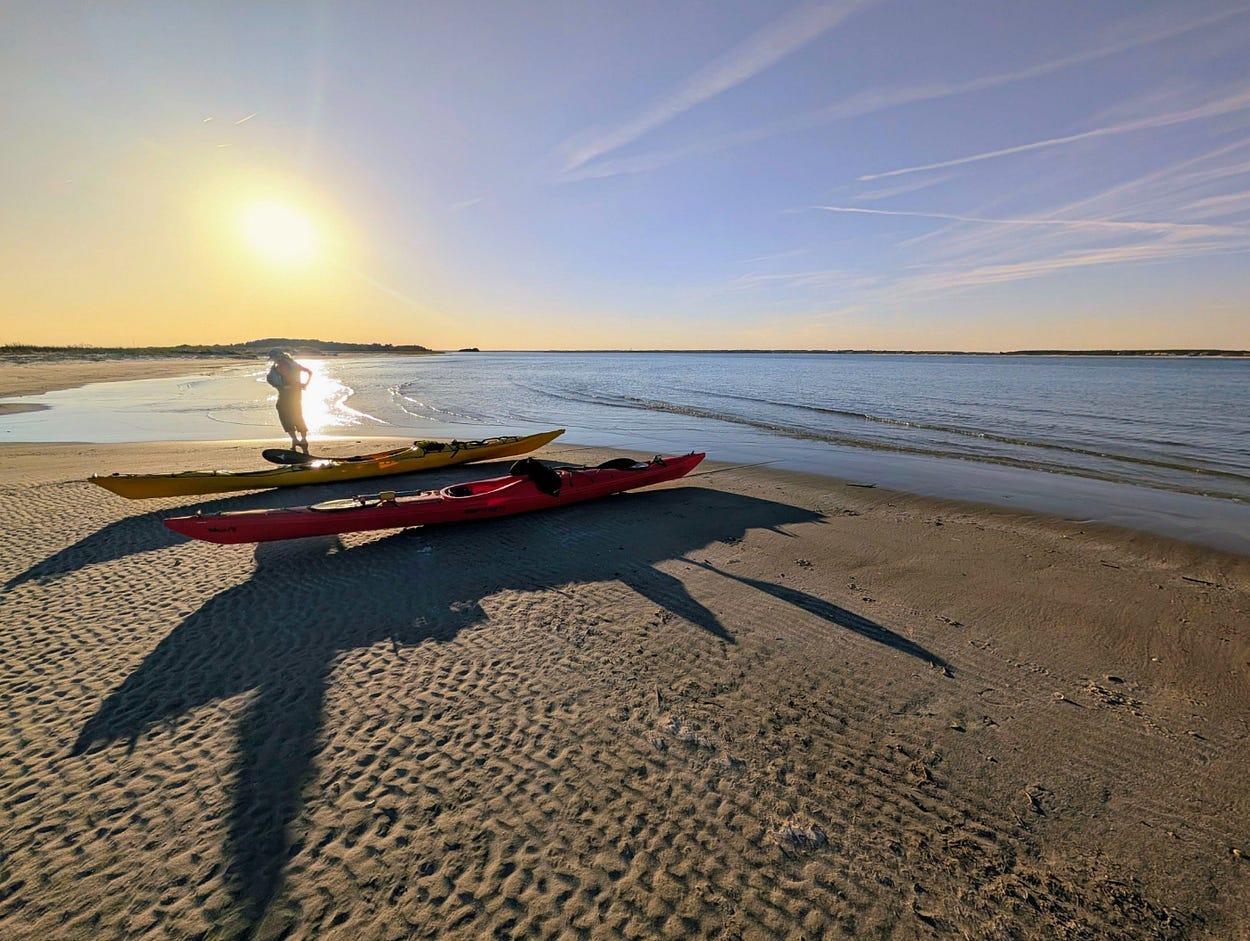
Full of gratitude for having been privileged to glimpse their secret journey, I turned and paddled back to rejoin Leslie, who had her own awe experience with a second pod. “I became a dolphin,” I said to her, somewhat giddily. And it was true. We were adventurers all. For those few minutes, human thoughts and intentions had vacated us. We had become wholly absorbed in traveling with fellow creatures in a wild sea.
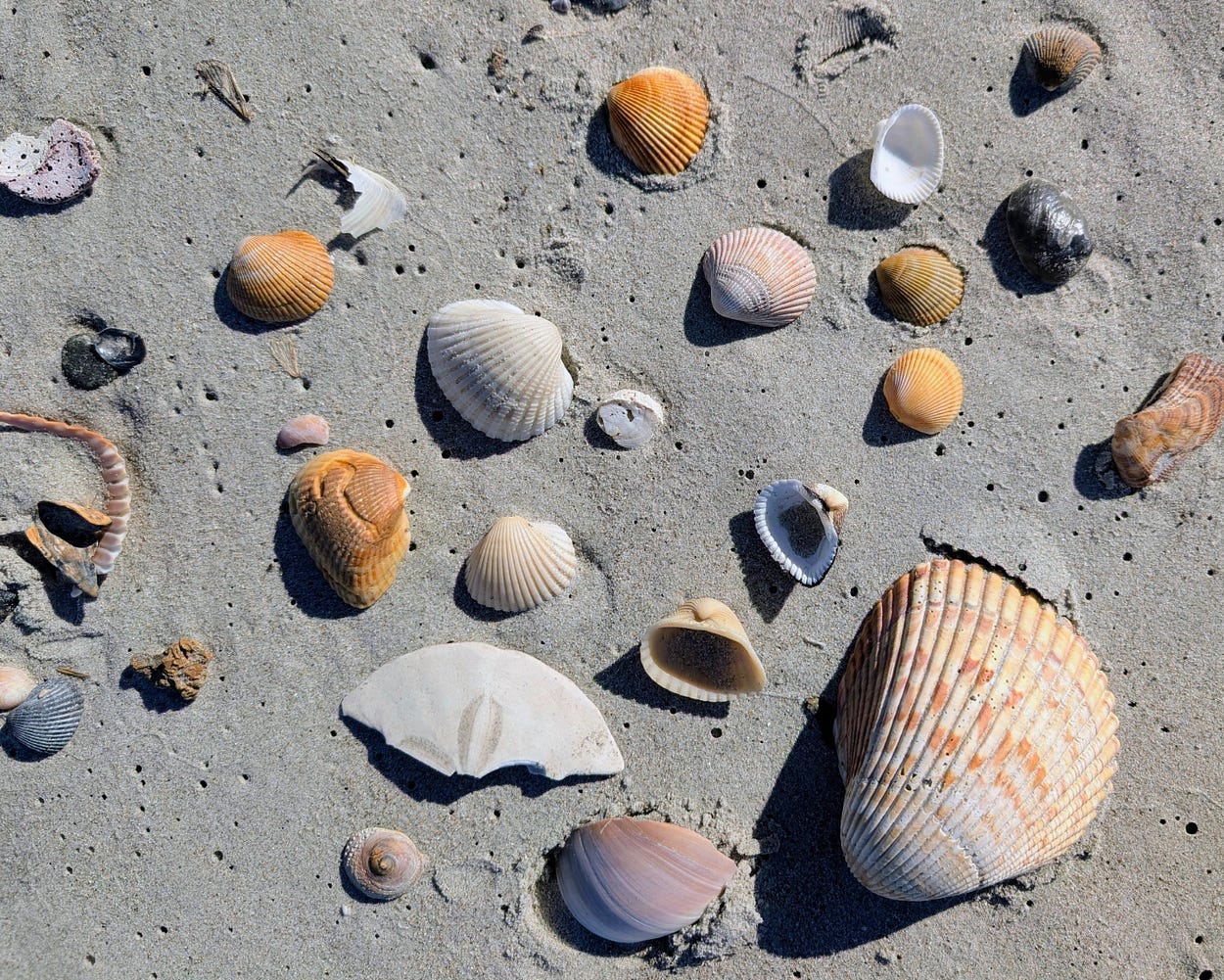
The feeling of gratitude magnified itself as we swung our kayaks back to the northeast, rounded the northeast point of the island, and entered calmer waters. What a privilege to have paddled with my soulmate through the salt marshes to this remote and beautiful island. What a gift to have gathered seashells on its beaches on this November day of brilliant sunlight and brisk wind. What a blessing to have had this spirited encounter with wild dolphins.
I was filled with a familiar yet striking realization: the world is acutely beautiful. What a privilege to be alive in it. The feelings came as a benediction: the preciousness of life. The rawness of it. “If I die tomorrow, I’ll have no regrets. I’ve had this. I was part of something timeless, mysterious, and beautiful.” That’s how powerful it felt.
Thanks to modern psychology, we can understand such an experience through the lens of psychology, which helps it feel more real. It was a classic awe experience if ever there was one. A reduced sense of self? Check. An expansive sense of time? Check. Heightened feelings of connection and gratitude? Check and check.
Nature is a source of awe — and music, art, and acts of human greatness are also. According to a UC Berkeley paper, “The Science of Awe,” the powerful feelings of awe can recede with time — but, if reflected on, can lead to personal growth and transformation. Awe leads to a shift of perspective. It provides the opportunity to see past surface distractions and to glimpse reality as it truly is.
The science and the awe
Later, my reading on dolphin behavior helped me appreciate the encounter even more. This had not been a random encounter with local dolphins on a daily fishing foray. Rather, we had intersected a journey of half-a-thousand miles. Serendipity had put us along their migration route at the exact time they passed through. The size of the pod, their southwest heading, their use of the current, 5-knot speed, close formation, and synchronized surfacing are all typical of bottlenose dolphins during their fall migration.
The dolphins in these pods had likely spent the summer off the coast of New Jersey and were part of the “Northern Migratory Coastal Stock” returning to winter waters in the Carolinas. I learned that, while migrating, dolphins focus on efficiency, which allows them to travel up to 60 miles per day (and leaves little time for Flipper imitations).
Their choreographed surfacing and diving, typical during migration, is beautiful to watch, but it also helps ensure the success of their migration. When dolphins swim synchronously and in close formation, it benefits their safety, hydrodynamic efficiency, and group cohesion. These behaviors ensure no individual gets left behind and help optimize the forward progress of the group.
While these practical reasons make sense, they don’t actually explain why dolphins travel in such close formation. What really keeps them together, despite the distractions, dangers, and fatigue that challenge them on their long and difficult journey? It’s not like young dolphins are lectured on the principles of hydronamic efficiency and social bonding before their first trip. Maybe what keeps them together is something they experience. Something about traveling close together and how it makes them feel.
Recent studies of dolphins concur that it’s the latter. This research shows dolphins gain emotional benefits when traveling as a close group.
For dolphins, traveling in a group is self-reinforcing. Moving as a tight group feels good, which makes them want more of it; and the more they do it, the better they feel. I’m inclined to believe this positive, connected, empowered state is not dissimilar to awe.
Co-voyagers in a sea of awe
In a previous piece, I wrote that animals likely experience awe, much as humans do. Awe helps them feel more at home in the world. It makes them love their lives even more. In that piece, I refer to Carl Safina’s book, Becoming Wild, where he argues that love of life — as intensified by experiences of beauty and awe — is an evolutionary advantage refined over millions of years. A creature that feels awe loves life more than a creature that doesn’t. Love of life can animate everything that creature does, making it more impassioned, vigorous, and successful. In short, it helps a creature thrive.
The real power of dolphin awe is best appreciated not on a sunny afternoon with fair seas and a favorable tide, but rather when scarcity of prey, exhaustion, storms, predators, injuries, or disease threaten to fragment the pod. It’s then that they need awe the most. It’s then that awe becomes the vital force that binds them and keeps them moving forward as a group.
What if awe can play a similar role in human life?
If we make time for it, awe can renew our love of life. It can refresh our desire to live in synchrony with others. It can inspire us to keep moving amidst storms of struggle, strife, and doubt.
When I next find myself amidst such a storm, I’ll remind myself of that pod of migrating dolphins. I’ll think of their long and arduous journey, I’ll remember the joy that infuses it. I’ll remember how it’s powered by love and awe.
Beautiful Ray!
“The thread of destiny.” Beautiful!
A true benediction indeed. What a wonderful spiritual experience to be in harmony with the natural world.
And the photos that nearly capture the moment. Thank You Ray